


 PLATFORM UPDATE:

Synthesis, photochemical and biological evaluation of novel photoswitchable glycomimetic ligands of Pseudomonas aeruginosa LecB
 ab
Giorgia
Tempra,
c
Alessio
Colleoni,
cd
Carlo
Matera,
c
Rossella
Castagna
*ae
and
Emilio
Parisini
*af
ab
Giorgia
Tempra,
c
Alessio
Colleoni,
cd
Carlo
Matera,
c
Rossella
Castagna
*ae
and
Emilio
Parisini
*af
Abstract
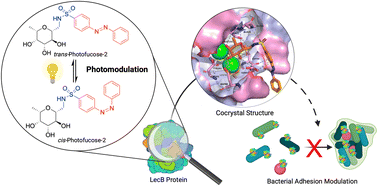
Bacterial multidrug resistance (MDR) poses a major threat to global health. The continued use of antibiotics, combined with genetic variations and exposure to nosocomial infections, has led to the selection and spread of multidrug-resistant bacteria. In recent years, photopharmacology has emerged as a strategy to combat MDR by enabling precise, light-controlled spatiotemporal modulation of the biological activity of photo-switchable compounds. Among different microbial species, Pseudomonas aeruginosa is a prominent bacterium involved in acute and chronic lung infections, posing a significant health concern, particularly among hospitalized and immunocompromised patients. The bacterium's capacity to form biofilms, a key factor in the development of MDR, is closely linked to the activity of the virulence factor LecB, a carbohydrate-binding protein with a well-documented role in biofilm formation. In this study, we report the design, synthesis and biological evaluation of two novel photoswitchable LecB modulators, photofucose-1 and photofucose-2. Isothermal Titration Calorimetry (ITC) analysis revealed that photofucose-2 binds LecB with high affinity, exhibiting a distinct difference in dissociation constants (Kd) between its cis and trans isomers. Moreover, we determined the X-ray crystal structure of the LecB-photofucose-2 complex, offering insights into its binding mechanism. These findings lay the groundwork for the rational, structure-based design of novel light-responsive compounds targeting LecB and represent a potential new avenue in the development of innovative strategies to combat bacterial resistance.
 Please wait while we load your content...


