


 PLATFORM UPDATE:


Rapid reductive catalytic fractionation for holistic valorization of lignocellulose through precise acid tuning and temporal window identification

Abstract
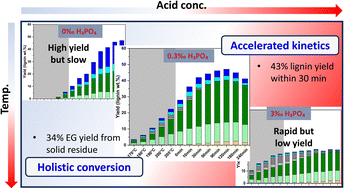
Reductive catalytic fractionation (RCF) is an effective technique that enables lignin depolymerization into aromatic monomers while preserving cellulose for downstream valorization. However, the typically prolonged reaction durations (>3 h) required for conventional RCF, stemming from slow kinetics of lignin extraction and depolymerization, impeding its industrial scalability. This study systematically investigated solvent composition, acid concentration, and reaction parameters to accelerate RCF kinetics and modulate monomer distribution. Through rapid benchmark reactions measured immediately at target temperature (0 h) using Ni/C, we demonstrated that a phosphoric acid-assisted RCF process in ethanol–water solvent achieves efficient lignin depolymerization. Remarkably, by finely tuning the acid concentration in the reaction system, this approach achieved a high monomer yield of 31% at 0 h, with a remarkably high production efficiency of 3.44 mg monomers per g lignin per min, exceeding most previously reported rates. Time course analysis further established that precise acid tuning and identifying the optimal temporal window are critical for maximizing monomer yield while preserving carbohydrates. Under optimized conditions employing 0.3 wt.‰ H3PO4, an aromatic monomer yield of 43% was attained within only 30 minutes. The resulting cellulose-rich solid residue, containing the RCF catalyst, was directly converted to ethylene glycol (35% yield) via an integrated one-pot aqueous-phase hydrolysis-hydrogenolysis process. This simultaneous valorization strategy also facilitated effective catalyst recovery and reuse. Our work establishes an efficient and potentially scalable rapid RCF paradigm, offering a promising route for the holistic utilization of lignocellulosic biomass.
 Please wait while we load your content...


