


 PLATFORM UPDATE:


Preparation of breathable, fluorine-free cotton fabric with robust hydrophobicity

Abstract
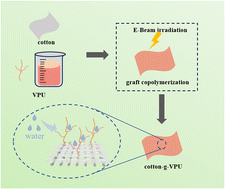
The fluorine-containing finishing agents commonly used for water repellent modification of cotton textile surfaces have been banned in most countries and regions because they have been proved to be seriously harmful to human beings and the environment, while non-fluorine hydrophobic modification of textiles suffers from the defect of non-durable performance. In this study, we propose a durable, fluorine-free and environmentally friendly approach for hydrophobic modification of cotton textiles: firstly, macromolecular polyurethane hydrophobes with vinyl groups are synthesized; subsequently, electron beam (E-beam) irradiation is used to generate reactive radicals on the surface of cotton fabrics, which triggers the graft polymerization of vinyl-based polyurethane (VPU) hydrophobes on the surface of the fabrics, resulting in the formation of covalently bonded, solid polyurethane hydrophobic layers on the surface of the fabrics. The hydrophobicity of the grafted cotton fabric was significantly improved and remained virtually unchanged after 20 accelerated washing cycles (equivalent to 100 times of household washing), which can be attributed to the robust covalent bonding between the hydrophobic polyurethane groups and the cotton fabric, thereby ensuring long-term stability of the hydrophobic performance. The scanning electron microscope (SEM) characterization and mechanical property test demonstrated that the radiation grafting of the macromolecule urethane hydrophobes had a small effect on the micro-morphology and mechanical properties of the cotton fabrics. The results of air permeability and moisture permeability of textiles proved that the method in this study can give better hydrophobicity to cotton fabric without affecting its air permeability and moisture permeability.
 Please wait while we load your content...


