


 PLATFORM UPDATE:


Coastal halophyte plant Atriplex maximowicziana with previously undescribed terpenoids and anti-colorectal cancer chlorophyll stereoisomers utilizing a molecular networking approach

Abstract
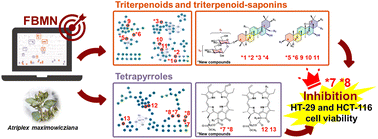
Coastal halophyte plants are well known for producing various bioactive secondary metabolites. Atriplex maximowicziana Makino (Hae-Fwu-Rong), a halophyte plant growing in coastal areas of East Asia, has been traditionally used to treat pathogenic wind and rheumatoid arthritis. A comprehensive feature-based molecular networking (FBMN) analysis of fractions derived from n-hexane and n-butanol layers of A. maximowicziana methanolic extract revealed triterpenoids, triterpenoid saponins, and tetrapyrroles as the predominant molecular families. Guided by the prominent molecular families identified, targeted fractionation led to the isolation and structural elucidation of eight previously undescribed metabolites, including four triterpenoid-saponins, atriplexosaponins A–D (1–4), two triterpenoids, atriplexoterpenes A–B (5–6), two chlorophylls, atriplexophylls A–B (7–8), along with 13 known compounds (9–21). Eighteen compounds with sufficient amounts were evaluated for their anticancer activity on human colorectal cancer cell lines, HT-29 and HCT-116, respectively. Among them, atriplexophyll A (7) was the most potent against colorectal cancer cells (IC50 = 0.14–0.33 µM across HCT-116 and HT-29), followed by atriplexophyll B (8) (IC50 = 7.95–8.81 µM). Both showed minimal effects on normal epithelial (IEC-6) and fibroblast (3T3-L1) cells within the tested concentration range. These findings highlight the potential of chlorophyll-b-type compounds bearing a pyran ring as selective anticancer agents and underscore the utility of FBMN in the discovery of bioactive natural products. Altogether, these findings unveiled the potential of A. maximowicziana in developing therapeutics for colorectal cancer.
 Please wait while we load your content...


