


 PLATFORM UPDATE:


Biowaste-derived porous nano-carbon-supported transition metal borides as efficient electrocatalysts for alkaline water splitting: a waste-to-wealth approach

Abstract
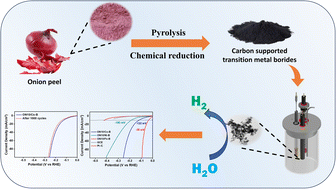
The development of high-performance and cost-effective electrocatalysts for water splitting is crucial for addressing the growing global energy demand and mitigating future energy crisis. In this study, a simple two-step strategy involving pyrolysis and chemical reduction was employed to synthesize a biomass-derived carbon-based electrocatalyst. Biowaste onion peel-based precursors synthesized at 1000 °C via pyrolysis showed the best performance as a support for transition metal borides in comparison with the same synthesized at temperatures of 600 and 800 °C. Furthermore, a series of carbon-supported metal boride catalysts, ON10/Co–B, ON10/Ni–B, and ON10/Fe–B, were synthesized and systematically tested for their electrochemical performance towards alkaline water splitting. Among the synthesized electrocatalysts, ON10/Co–B showed the best electrocatalytic activity with an overpotential of −122 mV for the HER at a current density of 10 mA cm−2. The catalyst ON10/Co–B also exhibited excellent stability for over 40 h and a durability for ∼1000 cycles in alkaline conditions. The enhanced electrocatalytic activity of ON10/Co–B for the HER is the result of the combined effect of the carbon support and Co–B. This work demonstrates the potential of biomass-derived carbon-supported transition metal borides as efficient and sustainable electrocatalysts for the HER.
 Please wait while we load your content...


