


 PLATFORM UPDATE:


Improving the conversion of petroleum coke to solid acid catalysts – effectiveness of hydrogen peroxide and impact of silica contamination
 a
and
Josephine M.
Hill
*a
a
and
Josephine M.
Hill
*a
Abstract
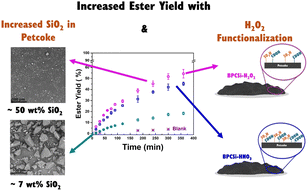
Petroleum coke (petcoke) samples containing silica sand (SiO2) in the concentrations of ∼50 and 7 wt% were functionalized with nitric acid and hydrogen peroxide to produce carbon-based solid acid catalysts by converting the inherent sulfur species in petcoke to sulfonic acid sites (–SO3H). The effect of SiO2 content and functionalization agent on the physical, surface, and acidic properties of the prepared materials were evaluated, and their catalytic activities were assessed in the esterification reaction of octanoic acid and methanol at 60 °C, yielding 17–54% of ester after 6 h. The functionalization with H2O2 is more environmentally friendly than with HNO3 and produces more active catalysts (ester yields of 54% and 45%, respectively). The activities of the prepared materials were more dependent on having fewer oxygen-containing carbon groups (related to total acidity) on the surface than on a higher concentration of sulfonic acid sites. Thus, the improved activity of the catalyst prepared with H2O2 was due to a lower total acidity (∼1 mmol g−1) than the catalyst prepared with HNO3 (∼5 mmol g−1). The stabilities of petcoke-derived catalysts were poor, and regeneration was not possible, which is a common problem for carbon-based solid acid catalysts. The petcoke with a higher content of SiO2 resulted in better esterification performance. The silica sand promoted the reduction of particle size during the ball-milling process, leading to reduced diffusion limitations and the generation of silanol groups that are hydrogen-bond donors, helping in the esterification reaction.
 Please wait while we load your content...


