


 PLATFORM UPDATE:


High-efficiency electrochemical removal of tetracycline using a stainless steel electrode coated with activated chestnut shell biochar
 †b
Qin
Zhou
†*ab
†b
Qin
Zhou
†*ab
Abstract
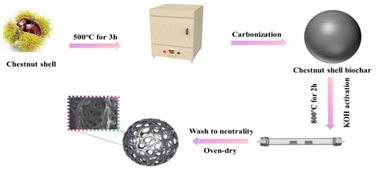
With the increasing discharge and improper disposal of antibiotics in the treatment of human diseases and in aquaculture, the widespread development of bacterial resistance has caused a serious public health problem. In this work, an activated chestnut shell biochar material (ACS) was coated onto stainless steel as the cathode and an iridium-tantalum titanium electrode used as the anode to investigate the electrocatalytic degradation of tetracycline in simulated wastewater. The results indicated that ACS pyrolyzed at 800 °C with 1 : 3 KOH has large specific surface area, uniform pore size, abundant active sites, and achieved the best catalytic performance to generate H2O2 via oxygen reduction, where ˙OH plays an important role in the electrocatalytic degradation. Moreover, the removal efficiency of TC reached 90.6% in 200 min under the optimized conditions, as follows: an initial pH of 3, an applied current of 40 mA cm−2, and an initial concentration of 25 µg mL−1. In addition, it was found that the TC removal remained at about 86.77% even after 20 repeated degradation cycles. The electrocatalytic experiment verified that the cathode composed of the coated carbon material could accumulate about 1.8-times that of a bare-steel electrode through the 2e-oxygen reduction reaction (2e-ORR) in the same period. As a consequence, the ACS electrode showed high efficiency for the electrochemical degradation of tetracycline. The prepared materials have broad application prospects in the treatment of TC wastewater.
 Please wait while we load your content...


