


 PLATFORM UPDATE:


Quinoline and coumarin isoxazole derivatives: synthesis, antitumor evaluation and molecular docking studies with Bcl-2

Abstract
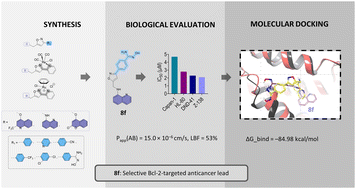
Resistance to conventional therapies in pancreatic and hematologic malignancies highlights the need for novel agents that selectively induce tumor cell death. This study presents the design, synthesis, and evaluation of new quinoline- and coumarin-derived isoxazole analogs (7a–e, 8a–f, 9a–e) and their Re(I) and Ru(II) complexes (7bRe, 9bRe, 7bRu, 9bRu). Antiproliferative assays against eight human cancer cell lines and noncancerous PBMCs identified quinoline amidoxime 8f as particularly potent, with IC50 values of 2.1–4.7 µM against hematologic cancers (DND-41, HL-60, Z-138) and pancreatic adenocarcinoma (Capan-1), with selectivity indices of up to 48. Permeability and metabolic stability studies showed high membrane permeability and moderate clearance for 8f. Molecular docking, validated by redocking of J1Q (PDB ID: 6QGK), confirmed that 8f forms stable, energetically favorable complexes with Bcl-2 (ΔG_bind = −84.98 kcal mol−1). These results support 8f as a promising lead compound for further development as a selective Bcl-2-targeted anticancer agent.
 Please wait while we load your content...


