


 PLATFORM UPDATE:


An aluminum-based adsorbent/zeolite molecular sieve composite for the sorption of lithium in the salt lake
 a
Zongren
Song
*a
a
Zongren
Song
*a
Abstract
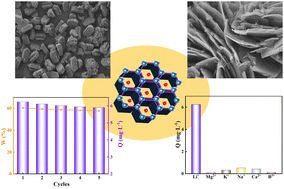
In the context of the global energy transition, the efficient extraction of lithium resources has become a critical link in the new energy industry chain. Addressing challenges such as poor selectivity, low adsorption capacity, and environmental concerns in extracting lithium from salt lake brines, this study developed a novel aluminum-based adsorbent/zeolite molecular sieve composite adsorbent (LiAl-LDHs/ZSM-5). The material was constructed with a hierarchical porous structure through seed-assisted synthesis of the ZSM-5 molecular sieve carrier, followed by in situ hydrothermal growth of lithium-aluminum layered double hydroxide (LiAl-LDHs). Systematic characterization via XRD, FT-IR, and SEM confirmed its crystal structure, functional group distribution, and micro-morphology. Single-factor experiments optimized key parameters (ZSM-5 : LiAl-LDHs = 1 : 2) and adsorption conditions (pH = 7, T = 25 °C, C = 10 g L−1). Kinetic analysis revealed that the adsorption conformed to the pseudo-second-order model, indicating chemisorption-dominated mechanisms. The composite demonstrated high selectivity (αLi Mg = 188.13) and recyclability in authentic salt lake brine, offering an environmentally friendly solution for exploiting high Mg2+/Li+ ratio resources.
- This article is part of the themed collection: 2025 RSC Advances Popular Advances Collection
 Please wait while we load your content...


