


 PLATFORM UPDATE:

Sustainable hydrogen production via NH3BH3 hydrolysis using platinum nanoparticles decorated on solvent-free synthesized LiNbWO6

Abstract
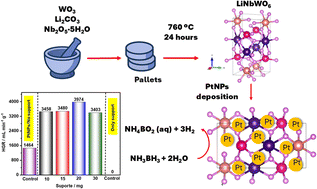
A novel catalyst for the controlled and safe evolution of hydrogen (H2) fuel from ammonia borane (NH3BH3) is presented in this work based on platinum nanoparticles (PtNPs) decorated on LiNbWO6 support. The LiNbWO6 compound was successfully synthesized through an unprecedented solvent-free approach, via the solid-state method using calcination at 760 °C for 24 hours. This material was employed as a support for PtNPs in the hydrolysis reaction of ammonia borane for hydrogen generation. LiNbWO6 and PtNPs/LiNbWO6 were both characterized by various techniques. X-ray diffraction (XRD) confirmed that the crystalline structure of LiNbWO6 was consistent with the JCPDS standard 84-1764. Fourier-transform infrared spectroscopy (FTIR) also corroborated the success of the novel solvent-free synthesis. Thermogravimetric analysis (TGA) indicated the high thermal stability of the support, with a mass loss of only approximately 1.5% up to 800 °C. Transmission electron microscopy (TEM) revealed the lamellar structure characteristic of the support, as well as the presence of finely dispersed Pt NPs with an average size of 2.80 nm. X-ray photoelectron spectroscopy (XPS) confirmed the presence of metallic platinum in the catalyst and demonstrated its robustness during reuse assays. The material proved to be an efficient support for platinum in the catalytic hydrolysis of ammonia borane, achieving a hydrogen generation rate (HGR) of 3974 mL H2 min−1·g−1, a value comparable to those reported in the literature.
 Please wait while we load your content...


