


 PLATFORM UPDATE:


Advanced photocatalytic degradation of POPs and other contaminants: a comprehensive review on nanocomposites and heterojunctions

Abstract
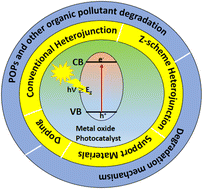
The environmental persistence and toxicity of pollutants such as persistent organic pollutants (POPs), synthetic dyes, and pharmaceutical residues necessitate the development of effective and sustainable remediation strategies. This review underscores the urgent need for advanced approaches to eliminate these contaminants, with a particular focus on metal oxide-based photocatalysts, such as TiO2, ZnO, WO3, CuO, and others. We have explored their photocatalytic mechanisms, inherent limitations, and recent advancements, such as elemental doping and heterojunction engineering, to enhance their activity under visible light. Nanocomposite systems, especially those incorporating heterojunctions, have demonstrated significant improvements in photocatalytic efficiency by facilitating charge separation and promoting the generation of reactive species. This review provides an in-depth examination of the mechanisms and practical applications of these materials in the degradation of POPs, dyes, and pharmaceutical pollutants. Furthermore, it outlines current challenges and identifies promising directions for future research aimed at developing high-performance photocatalysts for environmental remediation.
- This article is part of the themed collection: 2025 Reviews in RSC Advances
 Please wait while we load your content...


