


 PLATFORM UPDATE:


Design, synthesis, and in silico docking studies of novel cinnamaldehyde–chalcone derivatives with anti-cancer potential and in vivo acute oral toxicity profiling
 *a
*a
Abstract
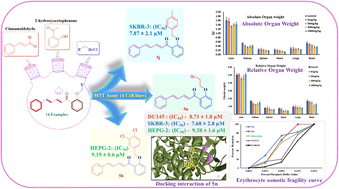
Cinnamaldehyde is a natural compound known for its antimicrobial and anticancer properties. Fourteen novel cinnamaldehyde–chalcone analogues (5a–5n) were synthesized and evaluated for anti-cancer, anti-bacterial, and anti-fungal activities. Among these, bromoethane chalcone 5n exhibited significant cytotoxicity against DU145 (IC50: 8.719 ± 1.8 μM), SKBR-3 (IC50: 7.689 μM), and HEPG2 (IC50: 9.380 ± 1.6 μM) cell lines, surpassing other derivatives. Compounds para methyl benzyl chalcone 5j and 2,3-dichloro benzyl chalcone 5b also demonstrated notable activity against SKBR-3 (IC50 7.871 μM) and HEPG2 (IC50 9.190 μM) cell lines. Erythrocyte osmotic fragility (EOF) analysis showed higher erythrocyte fragility for 5n (MEF50 = 0.457) and 5b (MEF50 = 0.538), indicating membrane-disruptive potential compared to quercetin (MEF50 = 0.431). Studies on antimicrobial activity revealed that compounds 5a–5e and 5n demonstrated moderate effectiveness against Staphylococcus aureus, while compound 5l showed activity against Candida albicans and Candida tropicalis. Docking studies revealed that compound 5n binds to succinate dehydrogenase, a key enzyme in the TCA cycle, ETC, with greater affinity (−12.9 kcal mol−1) than the standard inhibitor, malonate (−4.8 kcal mol−1). Acute oral toxicity assessment of 5n in Swiss albino mice demonstrated its safety at doses up to 1000 mg kg−1 body weight with no morbidity, mortality, or significant changes in haematological, biochemical, and pathological parameters. These findings highlight 5n′s potential as a lead compound for further preclinical studies targeting cancer therapeutics.
 Please wait while we load your content...


