


 PLATFORM UPDATE:


Betel leaf-mediated zinc oxide nanoparticle-coated silk fibres: a sustainable approach for biomedical applications
 a
and
Manu M.
Joseph
*a
a
and
Manu M.
Joseph
*a
Abstract
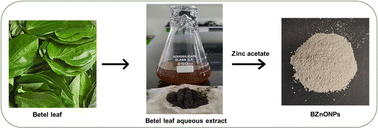
Clinical management of surgical site infections remains a challenge in biomedicine, where novel wound dressing materials are tested with a plethora of features. Here we describe a green and sustainable route to prepare biogenic zinc oxide nanoparticles (BZnONPs) using Piper betle leaf extract, which acts as a green reducing and stabilising agent. These biosynthesised nanoparticles were then used for the functional coating of degummed Bombyx mori silk fibers. Physico-chemical characterisation supports the efficient synthesis of crystalline, nanosized, and colloidal stable BZnONPs. The functionalization of silk fibers with BZnONPs resulted in the enhancement of the mechanical properties, tensile strength, and elasticity. Antibacterial testing proved the capability of the functional fibers against the strain Staphylococcus aureus. The as-synthesised fibers were biocompatible towards normal blood components, normal cells and exhibited slight toxicity toward cancer cells. Enhanced mechanical properties, antimicrobial action, and biocompatibility make BZnONP-coated silk fibers a leading player in various advanced biomedical devices, including sutures, wound dressings, tissue engineering scaffolds, and localised therapeutic platforms. Hence, this green nanotechnology approach opens up an alternative pathway toward the fabrication of multifunctional biomaterials with high translational value.
 Please wait while we load your content...


