


 PLATFORM UPDATE:


Encapturing triclosan from water using a novel sonoadsorbent triazine polymer with carbohydrazide linkages: experimental and theoretical studies

Abstract
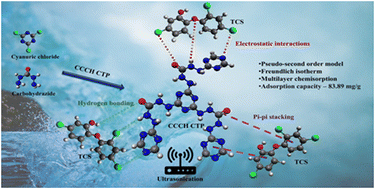
Triclosan (TCS), an active ingredient in personal hygiene products, has been considerably used and found in water bodies due to its increasing consumption. Even at minimal concentrations, TCS can harm living organisms, contributing to antimicrobial resistance and disrupting the reproductive and endocrine systems, raising significant environmental and health concerns. In this study, we developed a novel triazine-rich porous polymer, CCCH CTP (from cyanuric chloride and carbohydrazide), which exhibits a semicrystalline structure with spherical morphology. It is characterized by a porous area of 24 m2 g−1 with thermal stability up to 250 °C. It is used as an adsorbent supported by ultrasonication to remove TCS with an efficiency of 81% in acidic pH 3. The adsorption process reached saturation within 25 minutes, unveiling the effectiveness of the polymer. The maximum adsorbing capacity was determined to be 83.89 mg g−1, agreeing in terms of pseudo-second-order kinetics with the Freundlich isotherm model, indicating favorable chemisorption characteristics. These results were validated at the molecular level by the DFT calculations. These findings emphasize the potential of such porous materials in environmental remediation, highlighting their role in tackling the challenge of TCS contamination in water bodies.
 Please wait while we load your content...


