


 PLATFORM UPDATE:


Bioinspired wearable polymer microneedle patches: pioneering diabetic wound therapy for the horizon
 *b
*b
Abstract
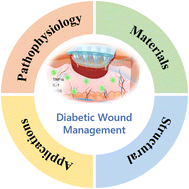
Diabetic wounds present persistent challenges due to impaired healing, recurrent infection, oxidative stress, and dysregulated glucose metabolism. Bioinspired polymeric microneedle (MN) patches have emerged as multifunctional platforms capable of penetrating the stratum corneum to deliver therapeutics directly into the dermis, enabling glucose regulation, antimicrobial action, reactive oxygen species (ROS) modulation, and proangiogenic stimulation. Recent experimental evidence has demonstrated that the integration of glucose oxidase-loaded porous metal–organic frameworks, photothermal nanomaterials, and antioxidant hydrogels within dissolvable MNs achieves synergistic bactericidal effects, accelerates collagen deposition, and enhances neovascularization in diabetic wound models. Stimuli-responsive designs facilitate precise and sustained drug release while reducing off-target effects. Structural innovations, including hollow, multilayer, and bioinspired morphologies, improve mechanical compliance, drug loading, and patient comfort. Despite promising in vivo healing outcomes and improved microenvironment regulation, large-scale manufacturing, long-term stability, and clinical translation remain key challenges. This review highlights advances in MN materials, structures, and mechanisms, providing insights for the development of next-generation intelligent wound therapies.
 Please wait while we load your content...


