


 PLATFORM UPDATE:


Efficacy of micro–nano bubble enhanced immobilized Chlorella vulgaris in the removal of typical antibiotics†
 *fg
and
*fg
and
Abstract
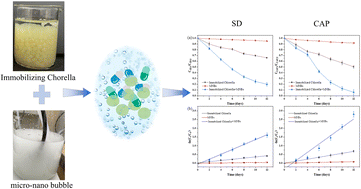
Antibiotic pollution poses a global environmental challenge, with effective removal technologies for different antibiotic types still lacking. This study investigates an innovative micro–nano bubble (MNB)-augmented immobilized Chlorella vulgaris system for remediating groundwater contaminated with sulfadiazine (SD) and chloramphenicol (CAP) antibiotics. Key parameters, including initial concentration (5–30 mg L−1), algal bead density (0.25–4 beads per mL), aeration time (5–30 min), and coexisting ions, were evaluated. SEM and FT-IR analyses revealed removal mechanisms. Results showed MNBs significantly improved microalgal biomass and removal efficiency (SD: 79.97%; CAP: 93.92%). SD elimination primarily depends on initial concentration and aeration, while CAP removal shows stronger ionic environment dependence. FT-IR confirmed stronger interactions (electrostatic attraction, surface adsorption) between algae and CAP. The technology showed particular effectiveness for CAP, achieving over 90% removal through MNB-algae synergy, providing valuable insights for targeted antibiotic remediation strategies.
 Please wait while we load your content...


