


 PLATFORM UPDATE:


Plasmonic sensing in microfluidic paper-based analytical devices integrated with metal nanoparticles: a review

Abstract
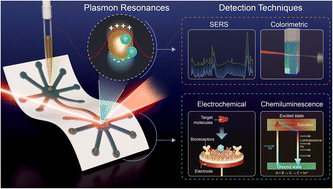
Metal nanoparticles (MNPs) have emerged as vital components in nanotechnology due to their unique ability to concentrate light at the nanoscale. This property makes them especially valuable in biosensing applications, where high sensitivity is essential. At the same time, cellulose-based materials like paper offer an affordable, widely available, and versatile platform, making them ideal for the development of paper-based microfluidic analytical devices (μPADs). These devices are revolutionizing point-of-care testing and on-site detection due to their scalability, portability, and biocompatibility. The synergy between the three-dimensional versatility of paper and the optical prowess of MNPs, has given rise to cutting-edge nanodevices that satisfy the ASSURED criteria—affordable, sensitive, specific, user-friendly, rapid and robust, equipment-free, and deliverable to end-users. This review provides a comprehensive examination of both plasmonic and non-plasmonic roles of MNPs within μPADs. It explores various detection strategies enabled by MNP integration, including colorimetric, surface-enhanced Raman scattering (SERS), chemiluminescent (CL), electrochemical, and electrochemiluminescent (ECL) methods. For each technique, the basic principles, practical implementation, and analytical strengths and limitations are discussed in the context of paper-based sensing platforms. Special attention is given to SERS-based μPADs, which offer rapid, sensitive, and low-volume analysis, with growing potential due to advances in portable Raman instrumentation. By addressing both plasmonic and non-plasmonic functionalities of MNPs, this work aims to provide a comprehensive perspective on the future of nanoparticle-integrated μPADs in global healthcare and analytical science. Additionally, the review highlights the importance of paper-based device architectures in supporting the integration of MNPs, ultimately enabling next-generation diagnostic and sensing platforms for diverse applications.
- This article is part of the themed collection: 2025 Reviews in RSC Advances
 Please wait while we load your content...


