


Simultaneous interpenetrating network (SIN) hydrogels from poly(sarcosine) and poly(ethylene glycol) (PEG)

Abstract
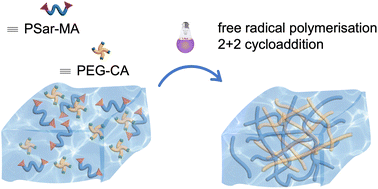
Hydrogels are widely employed in biomedical applications such as drug delivery, tissue engineering, and wound healing due to their ability to mimic the properties of biological tissues. Here, the development of novel simultaneous interpenetrating network (SIN) hydrogels composed of polysarcosine (PSar) and polyethylene glycol (PEG), crosslinked through orthogonal photochemical reactions is reported. The PSar single network was formed by free-radical polymerization of methacrylate-functionalized PSar, while the second network was generated simultaneously from cinnamic acid-modified PEG via [2 + 2] cycloaddition. Comprehensive characterization revealed that the SIN hydrogels exhibit enhanced mechanical performance, including higher elongation at break, ultimate tensile strength, compressive strength, fracture strain, and Young's modulus, compared to the individual networks. Furthermore, rat mesenchymal stem cell assays confirmed superior cytocompatibility, with robust metabolic activity and proliferation on SIN hydrogels. Collectively, these findings demonstrate that PSar-based SIN hydrogels combine mechanical robustness with biocompatibility, highlighting their strong potential as functional materials for artificial tissue applications.
- This article is part of the themed collection: Polymer Chemistry Open Access Spotlight 2025
 Please wait while we load your content...


