


 PLATFORM UPDATE:

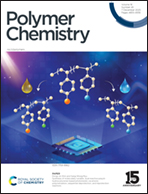
Synthesis of molecularly tunable, dual-reactive poly(4-hydroxystyrene)-based photoresists via anionic polymerization, sequential deprotection, and reprotection reactions

Abstract
A novel synthetic strategy was developed to introduce quantitatively protected functional groups into the backbone of poly(4-hydroxystyrene) (PHSt)-based copolymers, enabling their precise design and application as advanced photoresist materials. The synthetic route begins with anionically polymerized poly(4-tert-butoxystyrene), which is converted to PHSt via acid-mediated deprotection. The selective and quantitative protection of hydroxy groups is then achieved using acetyl chloride, followed by the introduction of excess ethyl vinyl ether or 3,4-dihydro-2H-pyran to yield copolymers containing acetoxy and acetal functionalities, namely, P(AcOSt-co-EESt) and P(AcOSt-co-THPOSt), respectively. These copolymers exhibit selective deprotection behavior under acidic (HCl) and basic (N2H4) conditions. Under basic conditions, only the acetoxy groups are deprotected to regenerate the hydroxy groups, whereas the acetal moieties remain intact. Conversely, the acetal groups are selectively cleaved under acidic conditions without affecting the acetoxy units. These results highlight a new synthetic approach for preparing copolymers containing protecting groups with different stabilities under acidic and basic conditions, enabling the selective removal of specific groups and generation of well-defined functional architectures through stepwise deprotection.

 Please wait while we load your content...


