


 PLATFORM UPDATE:

Electron beam facilitated structural evolution of nano-zincoxide

Abstract
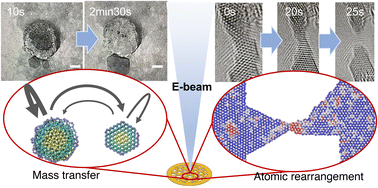
In situ transmission electron microscopy (TEM) is a powerful technique for observing microstructural evolution processes in real time. While electron beam (e-beam) interactions with materials are often considered detrimental, this study explores their constructive potential through in situ investigation of multi-phase nano-ZnO systems. We observed crystal reconstruction through grain rotation, surface diffusion and gas-phase-involved mass transfer triggered by e-beam irradiation. By integrating experimental observations with molecular dynamics (MD) simulations, we confirmed that the structural evolution was induced by the knock-on effect and determined the energy barriers associated with structural relaxation reactions. Notably, the knock-on effect not only facilitated vacancy creation and relaxation but also promoted recrystallization via mass transfer, even in an anti-Ostwald manner between unconnected particles. An extended generic model was developed to describe the structural and crystallinity evolution under e-beam irradiation, highlighting the combined influence of structural characteristics and crystallinity in determining the material's response to e-beam exposure. This work broadens the understanding of the constructive potential of the knock-on effect and provides valuable insights into leveraging e-beams for precise local modifications in nanomaterials.
 Please wait while we load your content...


