


 PLATFORM UPDATE:


Nanoengineered metal oxide-modified ZIF-8 nanocubes: a pioneering pathway for trace-level chloramphenicol detection in food matrices
 *ab
*ab
Abstract
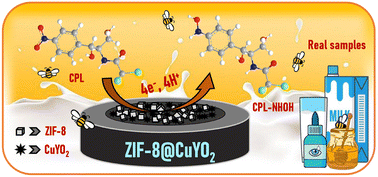
In this work, nanocubic ZIF-8 (zinc imidazolate framework-8) was prepared via a simple wet-chemical process. To enhance the physicochemical and electrochemical properties of ZIF-8 nanocubes, highly porous CuYO2, a delafossite-type material, was used as a supportive matrix. The integration of ZIF-8 nanocubes with highly porous CuYO2 improved structural stability, increased the electroactive surface area, and facilitated rapid electron transfer. The unique architecture of ZIF-8 within the delafossite structure provided more active sites for interaction. The ZIF-8@CuYO2 composite was prepared through a straightforward hydrothermal process and subsequently applied for the nanomolar detection of chloramphenicol (CPL). CPL is an extensively used hazardous antibiotic compound and also a hindering agent in the growth of both Gram-positive and Gram-negative bacteria. The physicochemical nature of the proposed material was scrutinized through diverse characterization techniques, signifying the desired formation of the ZIF-8@CuYO2 composite and its aptitude to enhance sensor performance. Due to the synergistic interaction between CuYO2 and ZIF-8, the proposed ZIF-8@CuYO2/GCE exhibited an excellent linear range, a low detection limit (DPV = 9.4 nM; i–t = 7.08 nM), and outstanding sensitivity, stability, and selectivity toward CPL. The proposed sensor maintained reliable performance for over 28 days and was successfully applied to real-world samples for the detection of CPL, achieving high recovery rates. Therefore, this work provides an effective approach for monitoring CPL in food samples and eye drop samples, ensuring drug residue safety in both food and medicinal formulations.
 Please wait while we load your content...


