


 PLATFORM UPDATE:


Livestock dung biochar-based N-halamine hydrogels with efficient photothermal and antibacterial function

Abstract
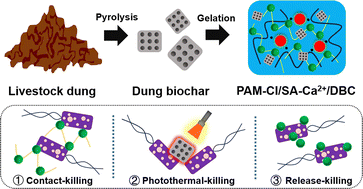
Rational disposal of livestock wastes has become a long-standing challenge for the sustainable development of the large-scale livestock breeding industry. In this study, livestock dung biochars with photothermal conversion characteristics were achieved through a pyrolysis strategy using livestock dung as raw materials, and incorporated them into N-halamine hydrogels for treating pathogens. The hydrogels realized a synergetic combination of Ca2+-crosslinked sodium alginate (SA–Ca2+), polyacrylamide-based N-halamine (PAM–Cl) and dung biochars (DBC) using a three-step strategy, showing photothermal conversion action of dung biochars and oxidative antibacterial properties of N-halamine. It can be concluded from the results of the colony counting method and inhibition zone assay, the photothermal characteristics accelerated the release of active chlorine from N-halamine hydrogels, demonstrating excellent antibacterial activity against 106 CFU mL−1 of Escherichia coli (E. coli) and Staphylococcus aureus (S. aureus). This strategy addresses a great challenge of recycling livestock dung and proposes an effective proof-of-concept approach to developing novel hydrogels.
 Please wait while we load your content...


