


 PLATFORM UPDATE:

Algal nanobionics and a nanobiohybrid system of biosynthesized ZnO-NPs to augment the cellular accumulation of biomolecules and its effect on microalgae†

Abstract
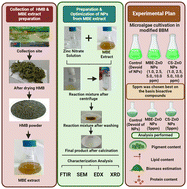
Algal nanobionics leverages nanotechnology to enhance microalgae-based biotechnology. This study presents an approach to synthesize zinc oxide nanoparticles (ZnO-NPs) from macroalgal bloom extract (MBE) and integrate them at various concentrations into Chlorella sorokiniana. The impact of MBE–ZnO-NPs on biocompatibility, biomass productivity, pigment contents, and intracellular dispersion was assessed. Results indicated that a 5 ppm concentration of MBE–ZnO exhibited high compatibility and significantly increased reactive oxygen species (ROS) levels (7.19 ± 0.4 μmol H2O2 g−1) and photosynthetic yields of chlorophyll ‘a’ (Chl ‘a’ 28.30%), chlorophyll ‘b’ (Chl ‘b’ 44.78%), and carotenoids (Car 37.94%) in microalgae. The lipid and protein contents increased, whereas carbohydrate content was reduced in the MBE–ZnO-NP-treated biomass. In addition, the biomass treated with MBE–ZnO NPs exhibited 29.28 mg/100 mg of total amino acid (AA) content, including 7.65 mg/100 mg of essential and 21.62 mg/100 mg of non-essential AAs. These findings highlight the necessity of green and natural NPs in optimizing and bioprospecting the potential of algae for sustainable ecological and economic approaches.
 Please wait while we load your content...


