


Sequential treatment of cyanide and phenolic mixtures using CMC-PVP-nZVI/Pd and Rhodococcus pyridinivorans strain PDB9T N1

Abstract
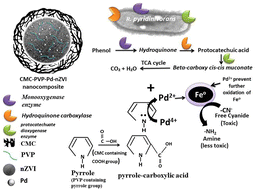
Cyanide and phenol are considered the major toxic pollutants in coke-oven wastewater. Cyanide, at a pH less than 10, is converted to HCN gas (pKa = 9.2). Hence, cyanide treatment requires strongly alkaline conditions, i.e., a pH of more than 10; however, at such a high pH, the viability of microbes is not feasible. Therefore, to overcome this incompatibility, a sequential nano-bio treatment system was developed, integrating a novel carboxymethyl cellulose-polyvinylpyrrolidone-stabilized nanoscale zero-valent iron doped with palladium (CMC-PVP-nZVI/Pd) nanocomposite, followed by bio-treatment using R. pyridinivorans strain PDB9T N-1. The first nanostage was operated at pH 12 to stabilize cyanide (CN−) and initiate its removal, while the subsequent biostage was operated at a pH of 7.4 to achieve the complete removal of phenol. To prevent the atmospheric oxidation of nZVI and to improve its reusability and electron mobility, it was doped with palladium and conjugated with CMC and PVP. The synthesised nanomaterials were characterized using XRD, FTIR spectroscopy, FESEM, EDX, and XPS analyses. Results revealed that about 99% of cyanide was removed with an initial dose of 100 mg L−1 at 30 °C using the nanocomposite, followed by the complete biodegradation of the remaining phenol (300 mg L−1). The cyanide removal efficiency of the nanocomposite was 1.8-fold higher than that of the bare nZVI. Overall, the cyanide removal process followed a pseudo-2nd-order kinetics model, revealing a chemisorption nature with a superior sorption capacity of 93.37 mg g−1. The intraparticle diffusion model showed that exterior mass transfer primarily governed the cyanide removal. Additionally, the nanocomposite exhibited strong reusability, demonstrating the efficacy of the proposed sequential nano-bio system.
 Please wait while we load your content...


