


 PLATFORM UPDATE:


Thioridazine induces phospholipid accumulation and necroptosis in parental and tamoxifen-resistant breast cancer cells†

Abstract
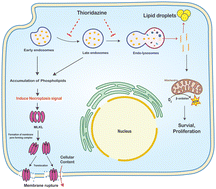
The development of acquired resistance to tamoxifen poses a significant clinical challenge in breast cancer treatment. Tumour heterogeneity has emerged as a primary reason for the clinical implications of resistance, yet we still lack actionable targets to address this issue. Repurposing existing drugs has become an emerging trend to tackle demanding medical indications. Therefore, we aim to study the efficacy of the antipsychotic drug Thioridazine against both parental and tamoxifen-resistant breast cancer cells. In this study, we have demonstrated that Thioridazine induces phospholipid accumulation, followed by necroptosis in both parental and tamoxifen-resistant breast cancer cell lines. We have shown thioridazine-mediated cytostatic effects through analyses of cell viability, cell count, caspase activation, cell cycle, and p21 expression levels. Moreover, employing a pharmacometabolomics approach, we identified that Thioridazine induces phospholipid accumulation in breast cancer cells. We established that Thioridazine promotes the accumulation of phospholipids rather than neutral lipids in cells via lipid-specific fluorescent quantification and imaging analysis. The phospholipid accumulation triggers necroptosis, which was evaluated through a propidium iodide uptake assay. Thioridazine activates RIP signalling, facilitating the subsequent translocation of pore-forming MLKL to the plasma membrane to initiate necroptosis. The formation of MLKL-induced membrane pores was confirmed using scanning electron microscopy for cell surface visualisation. Furthermore, thioridazine co-treatment enhances the efficacy of tamoxifen in resistant breast cancer cells, augmenting its potential for combinatorial treatment. Altogether, Thioridazine induces phospholipid accumulation followed by necroptosis in both parental and tamoxifen-resistant breast cancer cell lines, highlighting its potential application in breast cancer treatment.
 Please wait while we load your content...