


 PLATFORM UPDATE:


DNA-based Bi-layered effervescent ejecting microneedle (BEE MN) for glucose-responsive insulin delivery
 *ab
*ab
Abstract
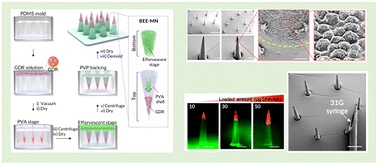
Microneedle-based drug delivery systems have gained increasing attention as minimally invasive alternatives to conventional injections, particularly for chronic diseases like diabetes. However, their limited drug-loading capacity and passive diffusion-based release mechanisms pose challenges in achieving precise and efficient drug administration. In this study, we present a novel bi-layered effervescent ejecting microneedle (BEE MN) system inspired by the penetration and retention mechanisms of a bee stinger. The microneedle consists of a dual-stage structure: a top-stage glucose-responsive DNA reservoir (GDR) encapsulated within a polyvinyl alcohol (PVA) shell and a bottom-stage effervescent polyvinylpyrrolidone (PVP) matrix that generates CO2 gas upon dissolution. Upon insertion into the skin, the microneedle undergoes self-propulsion due to CO2 generation, enhancing the delivery of the insulin-loaded DNA reservoir into the dermal layer. The DNA reservoir is engineered using rolling circle amplification (RCA) to form high-density insulin-binding aptamer structures, enabling controlled and glucose-responsive insulin release. The BEE MN system demonstrated significantly improved drug penetration, retention, and glucose-triggered release, with efficient insulin release under hyperglycemic conditions. These findings highlight the potential of CO2-powered self-propulsive microneedles for efficient, on-demand transdermal drug delivery, opening new possibilities for next-generation smart insulin delivery platforms.
 Please wait while we load your content...


