


 PLATFORM UPDATE:


Oxadiargyl analogs as potent inhibitors of Toxoplasma gondii protoporphyrinogen oxidase

Abstract
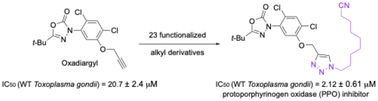
Toxoplasma gondii infects approximately one-third of the human population, posing a severe and potentially fatal risk to individuals with compromised immune systems. Our previous studies demonstrated that modifying the arene in the herbicidal protoporphyrinogen oxidase (PPO) inhibitor, oxadiazon, yields analogs that potently inhibit T. gondii PPO, a key enzyme in the heme biosynthesis pathway. In this study, we further investigated the structure–activity relationship of oxadiazon analogs by introducing aliphatic chains with varying functionalities, resulting in 23 new derivatives. Some of these compounds exhibited significant intracellular inhibition of wild-type T. gondii, with IC50 values ranging from 2 to 3 μM. Biochemical analysis confirmed that their mode of action is mediated by potent PPO inhibition, which further blocked heme production and damaged mitochondrial health status in the parasites. These findings enhance our understanding of oxadiazon's structural optimization and highlight its derivatives as promising early-stage candidates for developing effective therapies against toxoplasmosis in humans and other animals.
 Please wait while we load your content...


