


 PLATFORM UPDATE:


Design, synthesis, and structure–activity relationship studies of 4-substituted phenylpyrazolidinone derivatives as potent Ku70/80 targeted DNA-PK inhibitors

Abstract
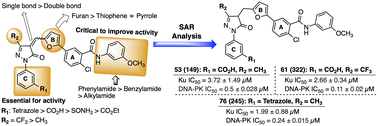
The Ku70–Ku80 (Ku) heterodimer complex plays a central role in the non-homologous end joining (NHEJ) double-strand break (DSB) repair pathway and the DNA damage response (DDR). Like DNA–PK, Ku is a promising drug target for cancer treatment when combined with radiotherapy or DSB-inducing agents. We have previously reported the first-in-class, early-generation, highly potent, and specific Ku–DNA binding inhibitors (Ku-DBi's) that block the Ku interaction with DNA and inhibit DNA-PK kinase activity. These early-generation Ku-DBi's also inhibit cellular DNA-PK, NHEJ-catalyzed DSB repair, sensitize non-small cell lung cancer (NSCLC) cells to DSB-inducing agents, and potentiate the cellular effects of these agents via p53 phosphorylation through the activation of the ATM pathway. In this study, we report a comprehensive structure–activity relationship (SAR) analysis around the initial X80 hit molecule to develop highly potent Ku-DBi's. Early generation Ku-DBi's display a potent Ku–DNA binding inhibitory activity with a range of 2 to 6 μM, and DNA-PK inhibitory activity in the nanomolar range of approximately 110 nM. Microscale thermophoresis assay shows that these compounds inhibit Ku70–Ku80 binding to DNA with a Kd value of 0.4–6.4 μM. The thermal stability analysis also supports the notion that these Ku-DBi's bind to the Ku as measured by nanoDSF (Differential Scanning Fluorimetry), which is consistent with the observed SAR trends. These Ku-DBi's may serve as candidate compounds for further modification and development as anticancer therapeutics in combination with radiotherapy or DSB-inducing agents to treat certain DNA repair-deficient cancers.
 Please wait while we load your content...


