


 PLATFORM UPDATE:

Green synthesis and physicochemical characterization of an eco-friendly zero-valent iron biochar based on Coula edulis shell and morinda bark extracts using response surface analysis
Abstract
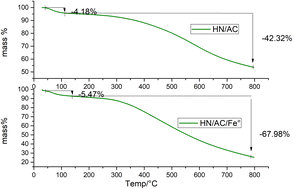
In the present study, two biochars obtained from waste agricultural residue were chemically activated with H2SO4 (HN/AC) and impregnated with zero-valent iron using morinda stem bark extract as a reducing agent (HN/AC/Fe°). The central composite design (CCD) of response surface methodology with three replicated centre points was used to optimize the operating conditions for the production of both biochars. The precursor and the prepared biochars were characterized via FTIR, TGA, SEM, BET and XRD analyses, and their efficiency was tested for the elimination of malachite green. The optimum synthesis conditions for HN/AC (1 N sulphuric acid, 10 g Coula edulis and 30 min) and HN/AC/Fe° (0.075 M iron concentration, 6 g morinda and 60 min) permitted us to obtain specific surface areas of 178.136 and 361.70 m2 g−1, respectively. The biochar HN/AC/Fe° presented a microstructure, which was more amorphous and more porous than HN/AC. HN/AC/Fe° demonstrated an elimination rate of 97.08% for malachite green. These results show that response surface methodology is an outstanding and useful tool for the optimal synthesis of biochar engineered using zero-valent iron and morinda stem bark extract.
 Please wait while we load your content...


