


 PLATFORM UPDATE:


Effect of high moisture extrusion on true ileal amino acid digestibility and DIAAS of quinoa–pea protein-based meat analogues
 ab
Suzanne M.
Hodgkinson,
*a
Natascha
Stroebinger,
a
Debashree
Roy,
a
Siqi
Li,
†a
Qing
Guo
c
and
Aiqian
Ye
*a
ab
Suzanne M.
Hodgkinson,
*a
Natascha
Stroebinger,
a
Debashree
Roy,
a
Siqi
Li,
†a
Qing
Guo
c
and
Aiqian
Ye
*a
Abstract
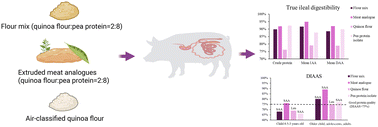
The true ileal digestibility (TID) of amino acids (AA) and the digestible indispensable amino acid score (DIAAS) of meat analogues were investigated by comparison with the ingredients before high moisture extrusion. It was hypothesized that (1) high moisture extruded meat analogues formulated with an air-classified quinoa flour–pea protein mixture would have different TIDs of CP and AA as well as DIAAS compared with the unextruded flour mixture, and (2) a complementary formulation of air-classified quinoa flour and pea protein isolate could mitigate AA limitations. Three experimental diets, a blend of air-classified quinoa flour and pea protein isolate in a ratio of 2 : 8 before (flour mix) and after high moisture extrusion (meat analogue), as well as air-classified quinoa flour, were fed to 6 healthy ileal cannulated pigs using a replicated 3 × 3 Latin square design with three 7-day experimental periods (n = 6). Pigs also received a protein-free diet for 7 days to correct endogenous AA excretions on an individual animal basis. The TID of AA, the amount of digestible AA, and the DIAAS were calculated for each diet. Although high moisture extrusion had no effect on the TID of crude protein, with the flour mix and meat analogue showing TID values of 89.8% and 91.9%, respectively, it led to a significant improvement in the TID of indispensable AA, increasing from 91.6% in the flour mix to 94.9% in the meat analogue (P < 0.05). The TID of most indispensable AA, except for histidine, leucine and threonine, was enhanced following high moisture extrusion (P < 0.05). The DIAAS values of the meat analogue were 76% (reference values: children aged 0.5–3 years) and 89% (older children, adolescents, and adults), which were greater than those of the flour mix (68% and 80%, respectively, for the same age groups). In both age groups, sulphur-containing AA were identified as the first limiting AA in the flour mix and the meat analogue. Results indicated that the improvement of the TID of AA in meat analogues could be attributed to the changes in the molecular-, cellular- and macro-levels during high moisture extrusion. Strategic formulation and the inclusion of a third protein source could further optimize protein quality for the formulation of meat analogues.
 Please wait while we load your content...


