


 PLATFORM UPDATE:


Pentadecanoic acid (C15:0) promotes placental angiogenesis by activating the placental PI3K-AKT signaling
 b
Jie
Peng
*b
b
Jie
Peng
*b
Abstract
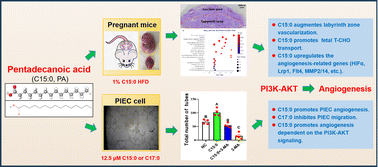
Maternal obesity impairs placental angiogenesis, increasing the risks of gestational metabolic disorders and fetal developmental compromise. Odd-chain saturated fatty acids (OCS-FAs), particularly pentadecanoic acid (PA, C15:0), demonstrate protective metabolic properties, yet their roles in placental angiogenesis remain unexplored. In this study, pregnant mice were fed a high-fat diet (HFD, 60% kcal) or isocaloric HFD supplemented with 1% (w/w) PA ethyl-ester (HFD + PA). Porcine iliac artery endothelial cells (PIEC) were used to assess angiogenic mechanisms in vitro. Our results showed that PA supplementation induced mild glucose intolerance (elevated 90/120 min glycemia, P < 0.05) without altering the body composition, fasting insulin, HOMA-IR, or plasma lipids (TG, T-CHO, HDL/LDL). PA augmented labyrinth zone (LZ) vascularization (P = 0.052) and upregulated fetal T-CHO transport (P = 0.002). RNA-seq revealed PA-activated PI3K-AKT signaling and enhanced the pro-angiogenic factor expression (HIFα, Lrp1, Flt4, MMP2/14, P < 0.05). Immunohistochemistry confirmed PI3K activation and increased CD31 endothelium in LZ. PA promoted PIEC tube formation (12.5 µM, P < 0.01) in vitro, while heptadecanoic acid (HA, C17:0) had no such effect and inhibited PIEC (12.5–25 µM, P < 0.01). PA's pro-angiogenic effect was abolished by PI3K inhibitor 3-MA (P < 0.01). In conclusion, PA promotes placental angiogenesis by activating the placental PI3K-AKT signaling, despite mild maternal glucose intolerance. These findings highlight PA's potential as a functional nutrient for mitigating gestational metabolic complications.
 Please wait while we load your content...


