


 PLATFORM UPDATE:


Phytochemical composition and bioactivity of edible Taraxacum officinale: potential as an ingredient in brain health-oriented functional foods
 †a
Donatella
Ambroselli,
a
Maria Loreta
Libero,
b
Alessandra
Acquaviva,
b
Annalisa
Chiavaroli,
*b
Cinzia
Ingallina
a
†a
Donatella
Ambroselli,
a
Maria Loreta
Libero,
b
Alessandra
Acquaviva,
b
Annalisa
Chiavaroli,
*b
Cinzia
Ingallina
a
Abstract
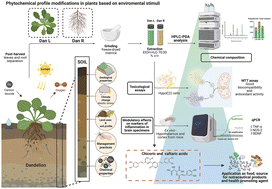
Taraxacum officinale (dandelion) is a widely recognised medicinal plant that is entirely edible and nutritionally rich. Traditionally consumed raw and cooked, it is used in cuisine and in food industry as a healthy ingredient, thanks to its high content of bioactive compounds. For centuries, dandelion has been valued in folk medicine for its choleretic, diuretic, antioxidant, anti-inflammatory, anti-tumour, and hepatoprotective effects. While the biological activities of Taraxacum species have been extensively studied, the specific role of T. officinale in modulating neuroinflammation remains underexplored. This study investigated the chemical composition and neuroprotective potential of hydroalcoholic extracts from dandelion leaves (Dan L) and roots (Dan R), derived from three ecotypes: Land Spontaneous (LSE), Mountain Spontaneous (MSE), and Organically grown (OE). In particular, HPLC-DAD analysis revealed that the MSE ecotype contained the highest levels of key polyphenols, including chicoric, caftaric, chlorogenic, and caffeic acids. Notably, MSE extracts of both Dan L and Dan R mitigated the cytotoxic effects of H2O2-induced oxidative stress in HypoE22 hypothalamic cells without causing toxicity. Ex vivo, these extracts modulated neuroinflammatory markers in lipopolysaccharide-treated mouse specimens (prefrontal cortex and hypothalamus) by downregulating TNF-α and NOS-2 and upregulating BDNF expression. These findings suggest that dandelion, especially the mountain ecotype, offers significant antioxidant and neuroprotective benefits. Taraxacum officinale thus emerges not only as a traditional edible plant but also as a functional candidate and polyphenol source for nutraceutical applications targeting neurodegeneration and cognitive decline.
 Please wait while we load your content...


