


Probiotics selection for low-lactose fermented goat milk products

Abstract
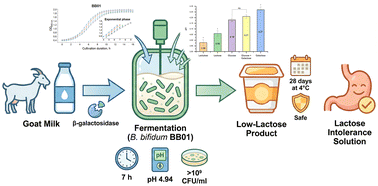
The consumption of fermented goat milk products can reduce the risk of developing various non-communicable diseases, which is critical for people with lactose intolerance living in low- and middle-income countries. The present study aims to determine the most appropriate probiotic microorganism for effective low-lactose goat milk fermentation. Twelve industrial strains were evaluated for their ability to efficiently ferment lactose residues, free galactose, and glucose. The strains were evaluated for technological and kinetic parameters of biomass cultivation in low-lactose goat milk obtained by β-galactosidase processing. The comparative analysis revealed the needed carbohydrate fermentation ability of Bifidobacterium bifidum strains BB01 and AC-1579; they both demonstrated the fastest carbohydrate consumption onset of 6.5 and 5.5 h, respectively, in the following order: lactose, galactose, and glucose. Carbohydrate metabolism in the other studied B. bifidum strains started significantly later, not earlier than 11.5 h, and proceeded more slowly. The highest specific growth rate of 0.81 h−1 was found for B. bifidum BB01. B. bifidum BB01 exhibited the highest fermentation rate to a pH of 4.94 within 7 h and a significant increase in biomass of 2.47 log10CFU ml−1, providing more than 109 viable probiotic cells in 1 ml of the fermented product. Other strains fermented milk to a pH of 4.59–4.97 within 11–14 h. The product was safe after refrigerated storage at 4 ± 2 °C for 28 days with 99.5% of viable probiotic cells remaining (9.17 log10CFU ml−1). The resulting product is widely available and may be highly recommended for people with lactose intolerance.
 Please wait while we load your content...


