


Functional and structural characterization of legume protein derivatives for advanced plant-based food applications

Abstract
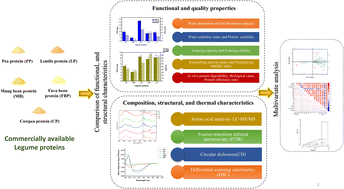
The global shift toward plant-based (PB) diets is driven by its health benefits and sustainability, with plant proteins offering potential to address malnutrition. This study aims to assess the protein secondary structural characteristics, functional attributes, thermal stability, and quality characteristics of various commercial legume protein derivatives: pea protein (PP), cowpea protein (CP), mung bean protein (MP), lentil protein (LP), and fava bean protein (FBP). Isolates exhibited superior functional properties, followed by concentrates and protein powder. Methionine and cystine are the most limiting AAs in all derivatives (0.09–1.01 g/100 g). The in vitro protein digestibility (IVPD) varied between 64% and 84%, with PP exhibiting the highest and FBP the lowest. PP serves as a potential source to meet the dietary needs of adults over 18 years (amino acid score > 100) with the exception of methionine and cystine. Structural and thermal analyses indicated a positive correlation with the ordered structure (β-sheet, α-helix, and β-turns) of protein derivatives. The proportion of the α-helix was higher in the PP isolate (33.30%), followed by the MP concentrate (31.10%), which reflects its thermal stability (MP: 99.3 °C). The higher thermal stability and secondary structure configuration are responsible for the formation of the fibrous structure during the structuring process. Multivariate analysis demonstrated a strong correlation between functional and structural properties and protein purity. The study successfully analysed the functionality of commercial plant proteins and categorized them into various derivatives for potential application in PB products.
 Please wait while we load your content...


