


 PLATFORM UPDATE:


Constructing and explaining machine learning models for the exploration and design of boron-based Lewis acids

Abstract
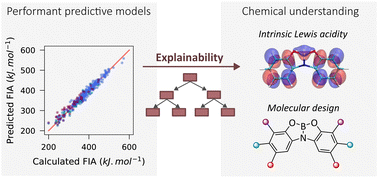
The integration of machine learning (ML) into chemistry offers transformative potential in the design of molecules with targeted properties. However, the focus has often been on creating highly efficient predictive models, sometimes at the expense of interpretability. In this study, we leverage explainable AI techniques to explore the rational design of boron-based Lewis acids, that activate a wide range of organic reactions. Using fluoride ion affinity as a proxy for Lewis acidity, we developed interpretable ML models based on chemically meaningful descriptors, including ab initio computed features and substituent-based parameters derived from the Hammett linear free–energy relationship. By constraining the chemical space to well-defined molecular scaffolds, we achieved highly accurate predictions (mean absolute error <6 kJ mol−1), surpassing conventional black-box deep learning models in low-data regimes. Interpretability analyses of the models shed light on the origin of Lewis acidity in these compounds and identified actionable levers to modulate it through the nature and positioning of substituents on the molecular scaffold. This work bridges ML and chemist's way of thinking, demonstrating how explainable models can inspire molecular design and enhance scientific understanding of chemical reactivity.
- This article is part of the themed collection: Celebrating International Women’s Day 2026: Women in Digital Discovery
 Please wait while we load your content...


