


 PLATFORM UPDATE:


Silver modified LDH/GCN heterostructures for visible-light degradation of estrogens

Abstract
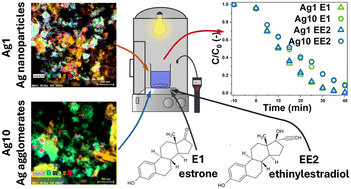
The persistence of steroidal estrogens in aquatic environments presents a serious challenge due to their endocrine-disrupting effects and resistance to conventional water treatment. Photocatalysis offers a sustainable solution; however, efficient and stable photocatalysts responsive to visible light are still needed. In this study, we report silver-modified layered double hydroxide/graphitic carbon nitride (LDH/GCN) heterostructures engineered for enhanced photocatalytic degradation of estrogens under visible light. The composites were synthesized via thermal condensation of GCN followed by hydrothermal growth of LDH with controlled silver doping. Structural and morphological analyses confirmed the formation of uniform heterostructures with well-dispersed Ag nanoparticles. The size and distribution of Ag particles were dependent on silver content. Enhanced photocurrent responses indicated improved charge separation and interfacial electron transfer in Ag-modified samples. Photocatalytic tests using model steroidal estrogens showed significantly improved degradation efficiency for Ag-LDH/GCN, achieving over 99.5% removal within 40 minutes under visible-light irradiation. This work demonstrates how tuning Ag content optimizes the electronic structure and photocatalytic performance of LDH/GCN materials. The findings offer valuable insights for the development of noble-metal-modified photocatalysts for efficient removal of persistent pollutants from water.
 Please wait while we load your content...


