


 PLATFORM UPDATE:


Metal–organic frameworks as catalytic platforms for multicomponent reactions (MCRs): mechanistic and design insights (2020–2025 overview)

Abstract
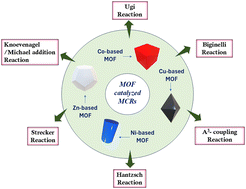
Multicomponent reactions (MCRs) serve as a pivotal strategy in synthetic organic chemistry, facilitating the one-pot construction of structurally intricate complex molecules from three or more reactants. Characterised by a broad substrate scope tolerance and minimal byproduct formation, MCRs have become indispensable in pharmaceutical synthesis and catalysis. However, traditional catalytic systems face significant challenges, including low selectivity, poor yields, and low porosity, which were further revolutionized by heterogeneous MOFs. Among various catalytic platforms, metal–organic frameworks (MOFs) have emerged as highly versatile and efficient catalysts owing to their exceptional porosity and tunable active sites. The past few years have witnessed a surge in MOF-catalyzed MCRs, leveraging their Lewis acidic/basic centres and coordination effects to facilitate these organic transformations. Building on growing interest, the present review systematically explores the state-of-art advancements in MOF-mediated MCRs, encompassing classical reactions such as the Biginelli, Hantzsch, Ugi, A3 coupling, and Knoevenagel/Michael addition reactions, emphasising their structural attributes such as accessible Lewis acidic and basic sites, functionalisation strategies, and incorporates recent breakthroughs, providing updated insights into how novel MOFs improve the MCR efficiency, active site accessibility, and sustainability. By consolidating recent research spanning 2020–2025, this review provides a comprehensive overview on the transformative potential of MOFs as an efficient heterogeneous catalyst in MCRs. The insights presented herein aim to solidify the role of MOFs as a cornerstone in modern synthetic methodologies while advancing sustainable chemistry.
 Please wait while we load your content...


