


 PLATFORM UPDATE:

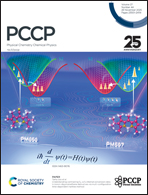
A new design of non-volatile molecular switching device using [π⋯π] dimer

Abstract
Based on supramolecular assemblies, the non-volatile resistive switching (NVRS) function can be achieved at molecular scale, but it commonly depends on stretching or compressing molecular junctions in width. This is a significant limitation for future molecular circuits. In this work, we present a new design for the NVRS function using a single [π⋯π] supramolecular assembly, and the involved molecular junction remains intact in width when switching between ON and OFF. The [π⋯π] assembly, composed of two (phenylethynyl)bipyridine monomers, is also named the (phenylethynyl)bipyridine dimer. Two configurations of the dimer for ON and OFF states are uncovered by density-functional theory studies. The bistability, crucial for the non-volatile property, is confirmed by climbing-image nudged elastic band studies. In charge transport, opposite quantum interference effects are revealed for these two configurations, and the ON/OFF ratio is as high as 104 under low bias voltages. The robustness of the designed device is illustrated as well by considering lateral and vertical offsets of the lead. The switching function works by applying a mechanical pulse to the lead in a direction transverse to the transport.
![Graphical abstract: A new design of non-volatile molecular switching device using [π⋯π] dimer](/en/Image/Get?imageInfo.ImageType=GA&imageInfo.ImageIdentifier.ManuscriptID=D5CP03034J&imageInfo.ImageIdentifier.Year=2025)
 Please wait while we load your content...


