


Lipid droplet dynamics in metabolic regulation
 *a
*a
Abstract
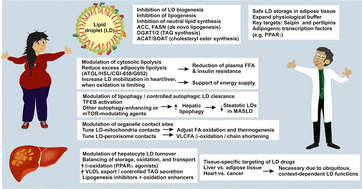
Lipid droplets (LDs) are ubiquitous intracellular organelles that store neutral lipids such as triacylglycerols and sterol esters within a phospholipid monolayer decorated by a specialized proteome. Far from being inert depots, LDs are highly dynamic hubs that integrate lipid storage with cellular and systemic metabolic regulation. Their biogenesis, growth, remodeling, and catabolism are tightly controlled by nutrient status, hormonal signaling, and cellular stress, and are coupled to key metabolic pathways including β-oxidation, lipogenesis, membrane synthesis, and signaling lipid production. Aberrant LD dynamics coexist with a broad spectrum of metabolic pathologies, from obesity and insulin resistance to metabolic dysfunction-associated steatotic liver disease, lipodystrophies, and cancer. In this review, we discuss current concepts of LD biogenesis and expansion, cytosolic lipolysis and lipophagy, and the physical and functional interactions of LDs with mitochondria, peroxisomes, endoplasmic reticulum, and lysosomes. We highlight how tissue-specific LD biology in adipose tissue, liver, skeletal muscle, pancreatic β-cells, and immune cells shapes systemic energy homeostasis and the response to metabolic stress. Particular emphasis is placed on chemical biology and imaging approaches that have transformed our ability to visualize and manipulate LDs in space and time, including fluorescent lipid probes, metabolic labeling, organelle-targeted proximity labeling, lipidomics, and functional screening. Finally, we outline the opportunities and challenges in therapeutically targeting LD dynamics for metabolic disorders. This includes the emerging concept of exploiting LDs as drug and nucleic acid delivery platforms. We also discuss the outstanding questions that need to be addressed in order to safely use LD biology for clinical benefit.
 Please wait while we load your content...


