


 PLATFORM UPDATE:


An improved LC-MS/MS-based assay for the quantification of vancomycin in human plasma and bone tissue from osteomyelitis patients

Abstract
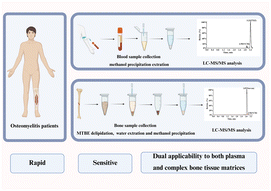
Osteomyelitis is a complex infection requiring prolonged antibiotic treatment. Treatment failure can lead to poor functional outcomes, reduced quality of life, and significant healthcare burdens. The therapeutic efficacy in the treatment of bone and joint infection is influenced not only by the sensitivity of antibiotics to the causative microorganisms but also by the level of antibiotic exposure at the infection site. Consequently, a thorough investigation into the penetration process and extent of antibiotics at the infection site holds significant importance. Current vancomycin detection methods primarily focus on plasma and other body fluids, while research on drug concentrations in bone tissue remains scarce. To address this gap, this study aims to establish a liquid chromatography-tandem mass spectrometry (LC-MS/MS)-based analytical method for accurate quantification of vancomycin concentrations in human plasma and bone tissue. The separation was completed in 7.5 min on a BEH C18 column (2.1 × 50 mm, 3.5 µm), and gradient elution was performed in a mobile phase consisting of 0.1% formic acid acetonitrile and 0.1% formic acid water at a flow rate of 0.3 mL min−1. The standard curve demonstrates linearity within the range of 1–100 µg mL−1 for plasma (1–200 µg g−1 for bone), with intra-day and inter-day bias and variation ≤15%. This analytical method has been successfully implemented in a clinical study for the determination of vancomycin in plasma and bone tissues of actual patients, following systemic administration during osteomyelitis debridement surgery.
 Please wait while we load your content...


