


 PLATFORM UPDATE:


An electrochemical sensor based on a triblock polyadenine-based probe and copper nanoclusters for the robust detection of the HPV16 gene
 *a
*a
Abstract
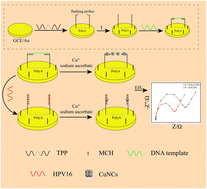
Cervical cancer is the fourth most common cancer among women worldwide. Human papillomavirus type 16 (HPV16) is one of the common biomarkers which cause cervical cancer. In this work, an electrochemical sensor based on a triblock polyadenine-based probe (TPP) and copper nanoclusters (CuNCs) was constructed for the rapid, sensitive and selective detection of HPV16. The TPP contained a central polyadenine (PolyA) segment and two flanking DNA probes. The middle PolyA segment had a high affinity for the gold electrode surface, leading to an adjustable density of the TPP determined by the length of PolyA. When the DNA template that mediated the formation of CuNCs was introduced, it partly hybridized with the two flanking DNA probes of the TPP. A large number of CuNCs were synthesized on the DNA template, producing a large electrochemical impedance signal. When the target DNA (HPV16) was present, it bound to the two flanking DNA probes of the TPP, which resulted in the release of the DNA template from the electrode and produced a small electrochemical impedance signal. The limit of detection (LOD) for the detection of HPV16 was 3.34 pM and the linear range was 10 pM to 10 μM. The designed sensor demonstrated good sensitivity, good selectivity, and satisfactory recovery, providing valuable insights into cervical cancer prevention and the development of electrochemical biosensors.
 Please wait while we load your content...


