


 PLATFORM UPDATE:

A novel electrochemical biosensor based on WO3@AuNPs and HBP@BIBB macromolecule-triggered ATRP for DR1 detection†

Abstract
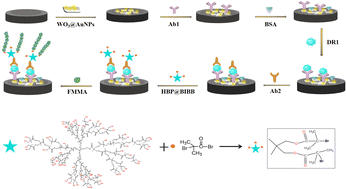
The sensitive detection of down-regulator of transcription 1 (DR1) plays an important role in the early diagnosis and treatment of Hashimoto's thyroiditis (HT). Herein, we report a novel electrochemical sensor based on the nanocomposite of tungsten oxide–gold nanoparticles (WO3@AuNPs) and hyperbranched polymer–2-bromo-isobutyryl bromide (HBP@BIBB) initiated atom transfer radical polymerization (ATRP) for the ultrasensitive assay of DR1. Monolayer WO3 nanosheets, which have high conductivity, were first compounded with AuNPs to obtain the WO3@AuNP nanocomposite. WO3@AuNPs can not only increase the conductivity of the electrode but also provide more active sites for biological molecules, thereby effectively amplifying the output signal. By introducing macroinitiator HBP@BIBB into the ATRP reaction, more electroactive molecules were introduced into the sensor, further amplifying the output signal and making the sensor ultra-sensitive. The optimized sensor demonstrated a wide linear range of 1 × 10⁻⁴ –1 × 10² ng mL−1 with a low detection limit of 2.91 fg mL−1. Moreover, the electrochemical biosensor has high selectivity, good stability, and strong anti-interference ability, and is suitable for the determination of DR1 in complex biological matrices. In conclusion, this electrochemical biosensor shows great potential in biomarker detection.
 Please wait while we load your content...


