


 PLATFORM UPDATE:

Pancreatic cancer environment: from patient-derived models to single-cell omics
 *a
and
Yingbin
Liu
*a
*a
and
Yingbin
Liu
*a
Abstract
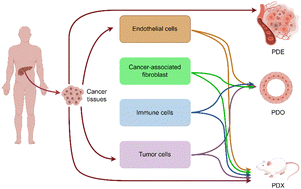
Pancreatic cancer (PC) is a highly malignant cancer characterized by poor prognosis, high heterogeneity, and intricate heterocellular systems. Selecting an appropriate experimental model for studying its progression and treatment is crucial. Patient-derived models provide a more accurate representation of tumor heterogeneity and complexity compared to cell line-derived models. This review initially presents relevant patient-derived models, including patient-derived xenografts (PDXs), patient-derived organoids (PDOs), and patient-derived explants (PDEs), which are essential for studying cell communication and pancreatic cancer progression. We have emphasized the utilization of these models in comprehending intricate intercellular communication, drug responsiveness, mechanisms underlying tumor growth, expediting drug discovery, and enabling personalized medical approaches. Additionally, we have comprehensively summarized single-cell analyses of these models to enhance comprehension of intercellular communication among tumor cells, drug response mechanisms, and individual patient sensitivities.
- This article is part of the themed collection: Single cell -omics
 Please wait while we load your content...