


 PLATFORM UPDATE:

Visual and ratiometric fluorescent probe via an intramolecular charge transfer for detection of a nerve agent simulant in solutions and in the gas phase†

Abstract
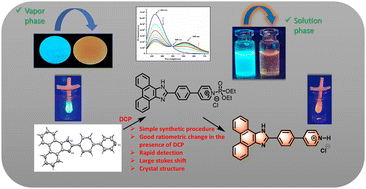
The development of fluorescent probes for rapid and accurate detection of hazardous nerve agents (NA) has been a main focus of research because of their use as chemical warfare agents (CWA) for mass destruction in war and terrorist attacks, and lethal toxicity for human beings. In this paper, a probe (PPID) based on the phenanthrene-imidazole unit and the 4-phenyl pyridine group was synthesized and characterized by single crystal X-ray diffraction, and could visually detect and quantify a nerve-agent simulant diethylchlorophosphate (DCP) with excellent sensing properties in solution and in the vapor phase. The probe with the nucleophilic pyridine-N atom as the active site reacts with the electrophilic central phosphorous atom of DCP and after that catalytic hydrolysis by moisture in the DMSO solution occurs to form a protonated sensor. Interestingly, the protonated chemosensor PPIDH showed an apparent intramolecular charge transfer (ICT), leading to a large red-shifted fluorescence “turn-on” response. The effects of the ICT character on the sensing properties displayed a ratiometric fluorescence response to DCP and a low limit of detection (1.4 nM). The sensing process was also verified by test strips by loading probe PPID with DCP vapor, response time, theoretical calculations, and live cell imaging.
 Please wait while we load your content...


