


 PLATFORM UPDATE:

Lipopolysaccharide and statin-mediated immune-responsive protein networks revealed in macrophages through affinity purification spacer-arm controlled cross-linking (AP-SPACC) proteomics†

Abstract
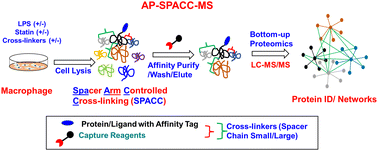
Toll-like receptor 4 (TLR4), a pattern recognition receptor, is activated by lipopolysaccharides (LPS) and induces the MyD88 pathway, which subsequently produces pro-inflammatory cytokines through activation of transcriptional nuclear factor (NF)-κB. Statins have been widely prescribed to reduce cholesterol synthesis for patients with cardiovascular disease. Statins may have pleiotropic effects, which include anti- and pro-inflammatory effects on cells. The molecular mechanism of the sequential influence of LPS and statin on the innate immune system remains unknown. We employed affinity purification-spacer-arm controlled cross-linking (AP-SPACC) MS-based proteomics analysis to identify the LPS- and statin-LPS-responsive proteins and their networks. LPS-stimulated RAW 264.7 macrophage cells singly and combined with the drug statin used in this study. Two chemical cross-linkers with different spacer chain lengths were utilized to stabilize the weak and transient interactors. Proteomic analysis identified 1631 differentially expressed proteins. We identified 151 immune-response proteins through functional enrichment analysis and visualized their interaction networks. Selected candidate protein-coding genes were validated, specifically squamous cell carcinoma antigens recognized by T cells 3, sphingosine-1-phosphate lyase 1, Ras-related protein Rab-35, and tumor protein D52 protein-coding genes through transcript-level expression analysis. The expressions of those genes were significantly increased upon statin treatment and decreased in LPS-stimulated macrophage cells. Therefore, we presumed that the expression changes of genes occurred due to immune response during activation of inflammation. These results highlight the immune-responsive proteins network, providing a new platform for novel investigations and discovering future therapeutic targets for inflammatory diseases.
- This article is part of the themed collection: Cross-talk and integrated post-translational modifications
 Please wait while we load your content...