


 PLATFORM UPDATE:

A biodegradable and near-infrared light-activatable photothermal nanoconvertor for bacterial inactivation†
 *ae
and
*ae
and
Abstract
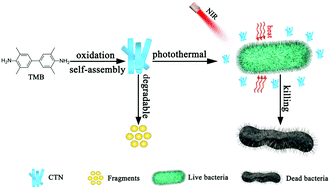
The development of biodegradable nanomaterials for near-infrared photothermal antibacterial is of great significance to improve the biosafety of nano-antibacterial strategies in clinical application. In this study, a new nano-antibacterial strategy was developed, in which a biodegradable charge-transfer nanocomplex acted as a high-efficiency near-infrared light-activatable photothermal nanoconvertor. The charge-transfer nanocomplex was synthesized through oxidation-induced self-assembly of 3,3′,5,5′-tetramethylbenzidine molecules. This nanocomplex can efficiently convert light energy around 900 nm into heat energy, with a photothermal conversion efficiency of up to 30%. More importantly, the nanocomplex can spontaneously degrade under physiological conditions within 12 hours. Utilizing the photothermal effect of this nanocomplex, both Gram-positive bacteria and Gram-negative bacteria can be inactivated within 2 minutes. In addition, the inactivation mechanism was systematically discussed and the results indicated that the photothermal effect induced bacterial cell membrane damage was probably responsible for the antibacterial effect.
 Please wait while we load your content...


