


 PLATFORM UPDATE:


DFT-based microkinetic model analysis of dry reforming of methane over Ru7/CeO2(111) and Ru7/CeO2(110): key role of surface lattice oxygen vacancy†

Abstract
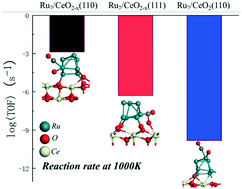
CeO2-Supported metal cluster catalysts play vital roles in dry reforming (DRM) reactions, which convert greenhouse gases (CH4 and CO2) to syngas, but the mechanism behind the action of surface lattice oxygen atoms as well as CeO2 support facets during the DRM reaction is unclear. Herein, we study the DRM reaction mechanism of a Ru/CeO2 model using two models of Ru7/CeO2(110) and Ru7/CeO2(111). Through density functional theory calculations, it was found that surface oxygen vacancies play a crucial role in the step of CO2 activation, and the H-assisted oxygen reverse spillover mechanism is the main process in the formation of oxygen vacancies. Ru7/CeO2(110) tends to form oxygen vacancies easier than Ru7/CeO2(111) due to the higher oxygen mobility and stronger metal–support interactions. Microkinetic model simulations showed that the DRM rate on Ru7/CeO2(110) is much higher than that on Ru7/CeO2(111), similar to the oxygen vacancy formation trend, and the reaction rates increase with increasing temperature from 800 K to 1200 K for both models. It was shown that the oxygen vacancy formation, CH* oxidation, and CO2 activation assisted by the oxygen vacancy have crucial influences on the production rate of the DRM reaction by the degree of rate control analysis. Our results provide further mechanistic understanding of the dry reforming reaction over CeO2-supported metal clusters and the key role of the surface lattice oxygen vacancies in order to obtain more active catalysts.
 Please wait while we load your content...


