


 PLATFORM UPDATE:


Electrochemical two-electron O2 reduction reaction toward H2O2 production: using cobalt porphyrin decorated carbon nanotubes as a nanohybrid catalyst†

Abstract
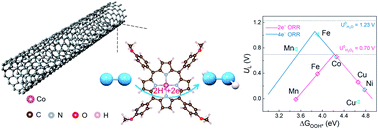
Electroreduction of O2 into H2O2 holds great promise to replace the energy-intensive anthraquinone process that is currently used as an industry standard, but its practical feasibility still requires materials with high catalytic efficiencies. It is now shown that a Co-tetramethoxyphenylporphyrin–carbon nanotube (CoTMPP/CNT) nanohybrid acts as a high-performance catalyst with fast electron delivery to active sites toward electrochemically generating H2O2 under acidic aqueous conditions, achieving a H2O2 selectivity of over 95% and achieving strong stability. More impressively, it reduces O2 to H2O2 with an unprecedented mass activity of 9694 A g−1 and a high turnover frequency of up to 6.95 s−1 (0.6 VRHE), representing the most active molecule-based two-electron O2 reduction reaction (ORR) electrocatalyst under an acidic environment so far. It also performs efficiently in neutral media. Taking advantage of the well-defined structure of the TMPP unit, we systematically study the trends in catalytic activity as well as selectivity toward the ORR at the M–N4 site (M = Mn, Fe, Co, Ni, Cu) with an identical chemical environment of TMPP. In situ attenuated total reflection infrared spectroscopy and density functional theory calculations were used to reveal further the catalytic mechanism.
 Please wait while we load your content...


