


 PLATFORM UPDATE:


Microarray investigation of glycan remodeling during macrophage polarization reveals α2,6 sialic acid as an anti-inflammatory indicator†

Abstract
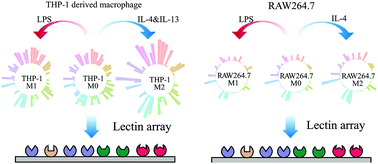
Glycosylation is a widely occurring posttranslational modification. Here, we applied a quick, convenient and high-throughput strategy (lectin array) to investigate the variation in glycans on different macrophage subtypes derived from THP-1 and RAW264.7 cells. For THP-1 cells, there were more significant differences in the glycan on M2 macrophages compared to the other two subtypes. In contrast, M1 macrophages exhibited more significant glycan remodeling than the other subtypes for the RAW264.7 cell line. The response of the lectins which recogonize the N-glycan and α2,6 sialic acid was higher during polarization into anti-inflammatory phase (THP-1 derived M2 subtypes), and lower in pro-inflammatory phase (RAW264.7 M1 subtypes). The regulation of several α2,6 sialyltransferase genes was coincident with the regulation of the α2,6 sialic acid on the two cell lines. The lectin response and glycosyltranferase gene expression confirmed that α2,6 sialic acid showed higher expression in the anti-inflammatory phase. This indicated that α2,6 sialic acid was a potential indicator for the anti-inflammatory response.
 Please wait while we load your content...