


 PLATFORM UPDATE:


An acceptor–donor–acceptor type non-fullerene acceptor with an asymmetric backbone for high performance organic solar cells†

Abstract
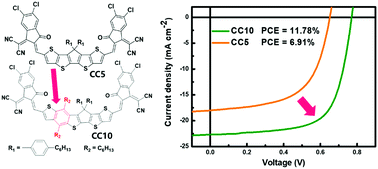
An A–D–A type acceptor CC10 with an asymmetric D unit has been designed and synthesized by introducing an alkylbenzene unit into a symmetric acceptor CC5. Compared with the symmetric CC5, the asymmetric CC10 showed a similar absorption range and energy level, but better π–π stacking, enhanced electron mobility and optimized microscopic morphology. As a result, the CC10-based organic solar cells demonstrated a high PCE of 11.78%, better than that of 6.91% for CC5-based devices. The significantly improved device performance caused by only a minor modification in the molecular backbone indicates that there is substantial potential of the asymmetric strategy for designing high performance active layer materials.
 Please wait while we load your content...


